DJ headphones do a specific job that has almost nothing to do with listening pleasure: they let you hear one track clearly while a very loud different track fills the room.
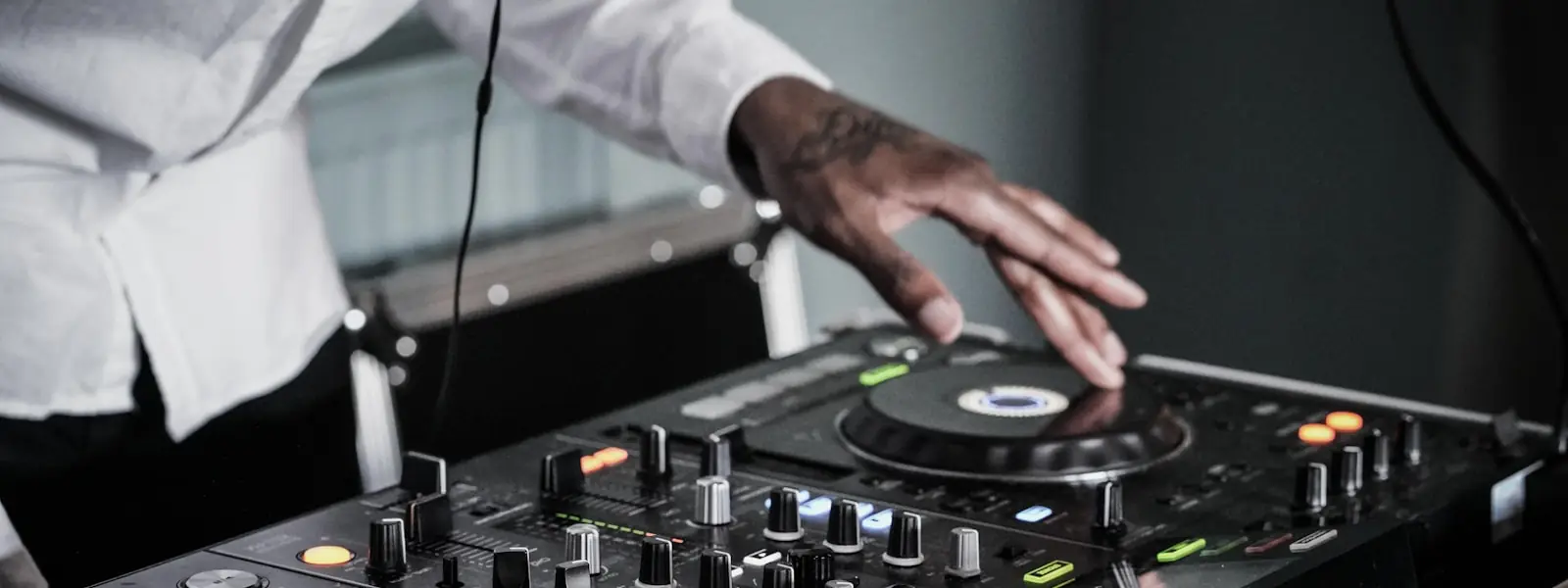
Not listening. Cueing — auditioning the next track, finding its first beat and matching it to what the room is hearing, while the room is hearing something else at high volume. Every design decision follows from that.
| Feature | Why |
|---|---|
| Closed-back | Seals out the room so the cued track is audible. Non-negotiable. |
| Wired | No latency. Also no battery to die mid-set. |
| Clear low end | You cue to the kick drum. If the bass is a woolly blur you cannot find the beat. |
| Swivelling cup | DJs monitor with one ear on and one off. A cup that rotates makes that comfortable rather than a neck exercise. |
Open-back headphones sound wonderful and are the wrong tool. They leak sound outward and let the room in by design, so in a loud environment you hear the room instead of your cue. Their delicate, detailed presentation is also optimised for a quiet chair, not for picking a kick drum out of a wall of noise.
DJ headphones get yanked off, stuffed in bags and stood on. The parts that fail are the cable and the headband hinge, in that order. A detachable cable turns the most common failure into a five-pound fix instead of a new pair, and replaceable ear pads roughly double a decent pair's usable life.
Cueing in a loud booth pushes people to turn headphones up dangerously, and DJ hearing loss is common and permanent. Monitor at the lowest volume that lets you find the beat, use one ear rather than both when you can, and consider musician's earplugs once you play out — they lower the level without muffling detail.
Because the job is hearing a quiet cued track over a loud room. Closed-back headphones seal around the ear and block outside sound, so the track you are lining up stays audible. Open-back designs deliberately let sound through for a more natural soundstage, which is excellent for listening at home and disqualifying in a booth.
No, for the same reason you should not practise on Bluetooth speakers: wireless adds 100 to 200 milliseconds of delay, and cueing and beatmatching both depend on hearing the result of your hand movements immediately. Wired is not a preference here — it is a requirement.
Speakers and monitors · Beatmatching by ear or sync · What equipment do you need?
 MixReady